
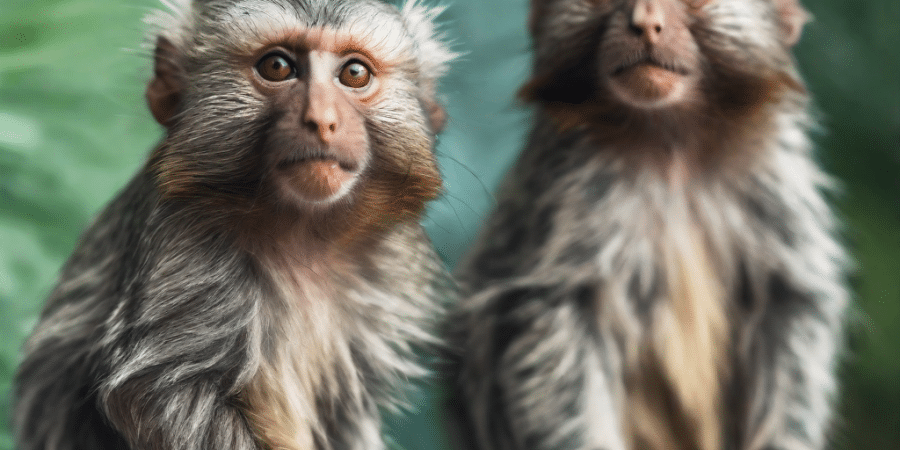
Finger monkeys, All curious pet owners wonder about the lifespan and natural habits of potential new family members. Finger monkeys, also called pygmy marmosets, fascinate many with their tiny stature and adorable appearance.
However, beyond appearances lies a complex set of characteristics that inform their care and longevity. In this article, we will provide an objective introduction to finger monkeys and a brief overview of their key traits to set the stage for later exploration of their typical lifespan.
What are Marmoset Finger Monkeys?
Classified scientifically as Callithrix pygmaea, finger monkeys originate from West-central Brazil’s tropical rainforests.
As the world’s smallest monkeys, adults average only 3-4 inches in length including their tail and weigh a mere 3-5 ounces.
Despite miniature dimensions, they exhibit all defining features of primates – dexterous limbs, grasping abilities, and advanced social behaviors.
A Brief Overview of Marmoset Finger Monkeys Characteristics
Finger monkeys are highly arboreal, meaning they are specially adapted for life in treetops. Their compact bodies, prehensile tails, and claw-like nails allow agility navigating tree branches.
For defense, they possess sharp teeth and can deliver a painful bite proportionate to their size. Like many small primates, finger monkeys are diurnal and form socially monogamous pairs or family groups of 3-5 individuals occupying a shared home range.
Lifespan of Finger Monkeys
Now that we have established what finger monkeys are and their key characteristics, we can investigate their natural lifespan both in the wild and under human care.
Average longevity as well as factors influencing how long individuals survive provide valuable context for those considering these intriguing primates as pets.
Average Lifespan of Marmoset Finger Monkeys
Multiple long-term studies reveal that in optimal conditions, finger monkeys live an average of 12-15 years.
When cared for properly by experienced primate keepers in accredited zoos and sanctuaries, they regularly surpass 15 years of age and occasionally reach 18-20 years.
However, in their native forest habitat, several field studies have found wild finger monkeys live on average 8-12 years due to environmental pressures.
Factors Influencing Marmoset Finger Monkeys Lifespan
Diet, habitat space, medical care and social-environmental conditions all impact finger monkey longevity. Proper nutrition meets their high fruit and protein needs for optimal health.
Ample, complex housing free of injury risks allows natural behaviors. Timely veterinary treatment for illness or injury prevents early death.
Strong social bonds and a stress-free setting support immune resilience. These managed factors have extended captive lifespans significantly versus risks faced in the challenging wild.
Different Names for Finger Monkeys
As with many species, finger monkeys are known by varied common names around the world. Their official scientific name of Callithrix pygmaea refers specifically to their taxonomy. However, different regions have adopted unique terminology over time.
Alternative Names in Different Countries and Regions
Perhaps the most well-known appellation is “finger monkey”, owing to their particularly petite limbs that resemble human fingers.
| Country/Region | Alternative Name | Description |
|---|---|---|
| Brazil (native location) | Mico-estrela | Portuguese for “star monkey”, referring to their bright eyes. |
| Spanish-speaking South America | Mono arquero | “Archer monkey”, honoring their skilled tree-dwelling abilities. |
| United Kingdom/Europe | Dwarf marmoset | – |
| United States | Finger monkey | From their petite limb size resembling human fingers. |
| Lesser used | Huckleberry monkey | – |
| Lesser used | Wedding monkey | Alluding to their pair-bonding behaviors. |
Understanding these diverse names provides cultural context around the fascination finger monkeys have sparked globally due to their one-of-a-kind size and precious disposition.
Standardizing on their scientific moniker helps avoid confusion when discussing their natural history and captive welfare. Let me know if you require any clarification or have additional questions!
Species of Finger Monkeys
While commonly referred to collectively as finger monkeys, this group is actually a genus comprising multiple distinct species that warrant individual profiles. Let’s explore some prominent members of the Callithrix genus found across Central and South America.
Overview of Various Species of Finger Monkeys
- The common marmoset (C. jacchus) ranges from northeastern Brazil into parts of French Guiana and has a typical lifespan of 5-10 years.
- The buffy-tufted marmoset (C. aurita) lives 10-15 years and resides in western Brazil/Bolivia.
- The golden-headed lion tamarin (L. chrysomelas) lives 15-20 years from Brazil’s coastal rainforests.
- The pygmy marmoset (C. pygmaea) – our focus – also originates from western/central Brazil forests, surviving 8-15 years.
Notable Features and Differences Between Species
While all exhibit characteristics like prehensile tails and small statures, certain physical and behavioral adaptations set each species apart.
The marmoset boasts a contrasting black fur patch while the tufted marmoset sports a lion-like mane. Range location and environmental niche influence factors such as territoriality, group size and structure across Callithrix. Further research unpacks these nuanced qualities forming each fascinating species.
Habitat and Natural Environment
To truly appreciate our miniature primate friends, understanding their specialized habitat proves invaluable. Nestled within Brazil’s interior Atlantic Forest, finger monkeys flourish in lush ecosystems perfectly suited to their arboreal agility.
Let’s explore their preferred woodland realm and environmental determinants shaping their success in nature’s complexity.
Preferred Habitat of Finger Monkeys
Densely leafy canopies towering over spring-fed streams create ideal finger monkey domains. They favor Upper montane forests and gallery woods where broad-leafed and palm trees, lianas and air plants provide boundless routes navigating treetop territories.
Dietary needs find fulfillment within such biodiversity which they carefully protect through territorial group-bonding.
Environmental Factors Affecting Their Survival
Temperature/humidity balance, nutrient-rich soil and protected water sources allow flourishing plant-life forming woodland architecture upon which these primates depend.
Disturbances like fire, logging and agriculture endearingly disrupt this fine-tuned balance. Conservation of intact corridors permits safe territorial shifts with climate/season as finger monkey resilience ingeniously persists within nature’s perfection.
Finger Monkey Diet and Nutrition

Understanding our finger monkey friends’ dietary needs brings us closer to their natural rhythms and requirements for thriving.
Their tiny frames house fast metabolisms demanding nutrient-dense foods found within favored forest domains. Let’s explore specifics of their typical consumption and what ensures optimal health.
Typical Diet of Finger Monkeys
Fruit forms a substantial staple, with over 60% deriving from various tropical berries, nuts and seeds. Protein sourcing skillfully gathers insects, spiders, bird eggs and a few small vertebrates captured through dexterous teamwork.
Gum and plant exudates supply essential sugars when seasonal fruit dips. Water readily found via quality collection sites prevents dehydration threats.
Specific Nutritional Requirements
High protein/fiber support muscle mass on slender frames constantly in motion. Abundant vitamins C and A aid healthy eyesight guiding acrobatics while antioxidants bolster strong immune defenses against forest pathogens.
Minerals like calcium fortify delicate bones absorbing impacts. Captive diets carefully mimic nature’s provisions for continued thriving wherever they reside.
Health plays a big role in our furry friends’ quality of life, both in native woodlands and caring human homes. Under natural conditions, factors like injuries from falls or encounters with larger wildlife do occur unfortunately.
However, preventable issues often stem from improper nutrition, housing or husbandry lacking knowledgeable attention to their needs. Let’s explore how best supporting health maintains finger monkeys’ otherwise vibrant wellbeing.
Common Health Problems in Finger Monkeys
Parasites naturally cycle in wild troops yet indicative care lapses if left untreated. Proper dental maintenance catches early problems affecting tiny molars chewing varied diets. Stress from overcrowding or lack of stimulation sadly sees behavioral issues surface requiring swift compassion.
Preventive Measures and Veterinary Care
Consistent wellness exams catching subtle changes early prevent larger troubles. A vetenced technician ensuring diets mirror nature’s balance cuts risks.
Enrichment fills active days reducing boredom tendencies. Soft substrates provide comfort natural branches lack in welcoming homes. Education and regular checkups between devoted guardians and professionals form the ultimate partnership for long lives filled with joy.
By caring for the whole primate, we honor these captivating creatures’ incredible spirits. They offer us so much; letting’s strive always meeting their trusting dependency with diligent affection.
Finger Monkeys Compatibility with Families and as Pets
Finger monkeys undoubtedly form preferences through familiarity. However, as non-domesticated animals, certain needs may differ from domestic pets. Compatibility requires extensive research and commitment beyond impulse.
Interaction and Behavior with Humans:
Being prey in the wild, monkeys prefer avoiding forced contact. Gentle interaction on their terms respects this. Their natural liveliness indoors requires engaging toys, climbing and foraging stimuli and space to retreat when stressed. Positive association with patient caretakers comes gradually through trust.
Suitability as Family Pets:
Monkey strength means accidental scratches pose risk, important to consider if young kids are present. Even well-socialized primates perceive micro-expressions like impending shouts as potential threats and may react swiftly out of instinct. Dedicated daily training and robust caging ensures safety of all.
Overall compatibility depends on providing a safe, enriching captive environment honoring their wild natures. With research and specialist guidance, human-monkey friendships can form. But high-needs exotic pets aren’t suitable for most lifestyles. Sanctuaries prioritizing lifetime welfare may be a worthier option for those eager to learn about our primate cousins.
Summary of Key Points About Finger Monkeys
- Finger monkeys naturally thrive within intricate rainforest ecosystems that sanctuaries painstakingly aim to replicate.
- Their specialized diets and complex social behaviors stem from millennia of genetic adaptations we can appreciate, but not replace, through domestication.
- Interaction requires utmost care and consent due to their prey instincts in the presence of potential threats, such as young children.
- Travel is an immense source of stress and should only be undertaken if absolutely necessary, with permits secured and transport conditions verified by experts as exemplifying five-freedoms standards.
- Compatibility as a household pet relies on extensive research, space, resources and serious lifetime commitment exceeding impulse, given their sensitive care requirements.
- Lifespan in the wild is approximately 8-10 years, while in captivity with excellent care they have been known to reach 15-18 years.
- Sanctuaries prioritizing non-releasable primates’ enrichment and dignity through naturalistic housing and social groupings provide an alternative option for those seeking to deepen understanding without undertaking private ownership.
- Ultimately, preserving biodiversity hinges on recognizes all beings’ sentience and right to pursue their nature, which thoughtful discussion can promote as we continue learning from our primate relatives.
Leave a Reply